The project involves a transformation of an apartment on Julius Bloms Gade, based on respect for the building’s original character and a contemporary development of its spatial qualities.
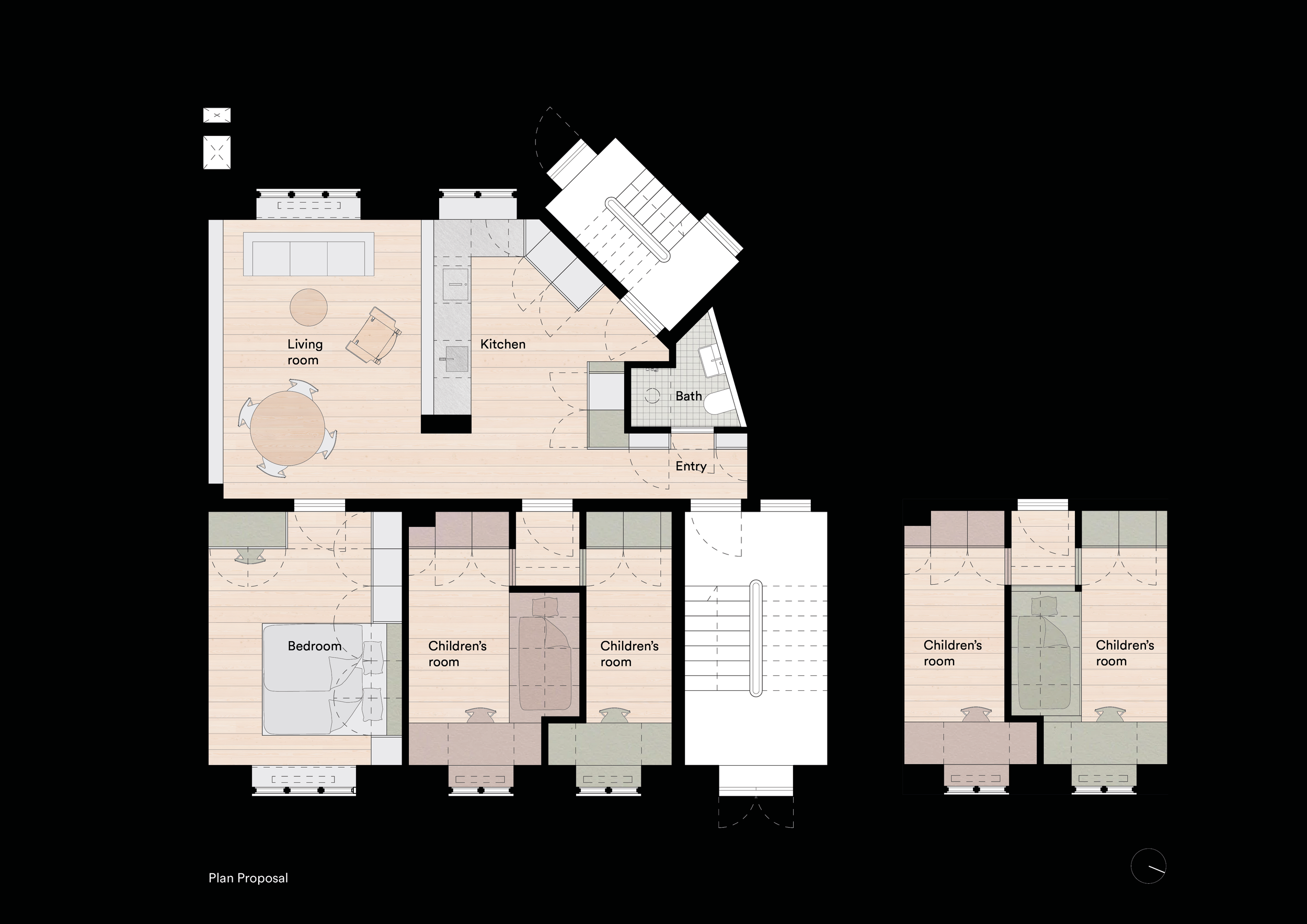
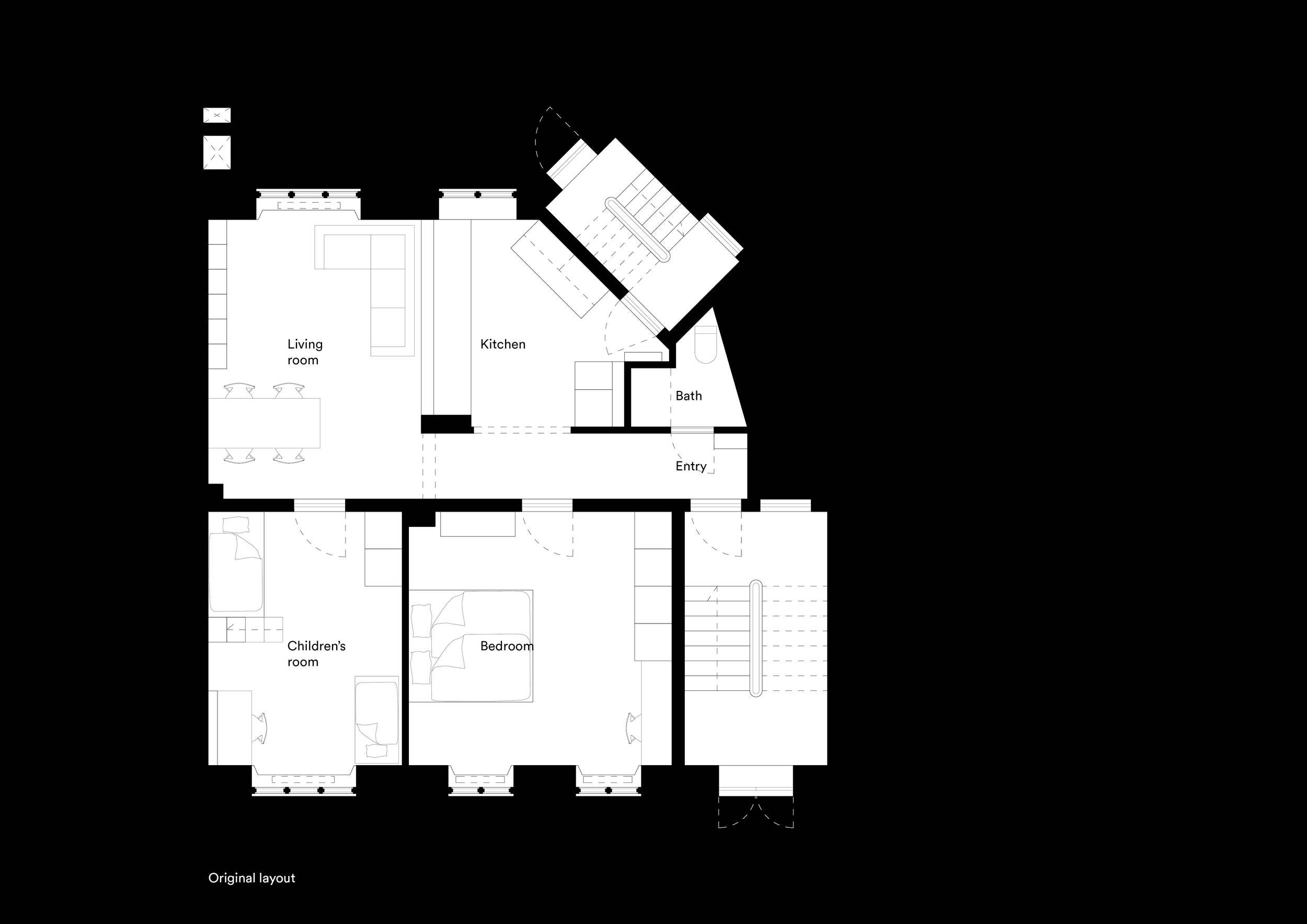
The design strengthens daylight, connectivity, and functionality while preserving the apartment’s proportions and identity. The existing layout of four well-defined rooms is maintained, building on its clear organization and efficient circulation.
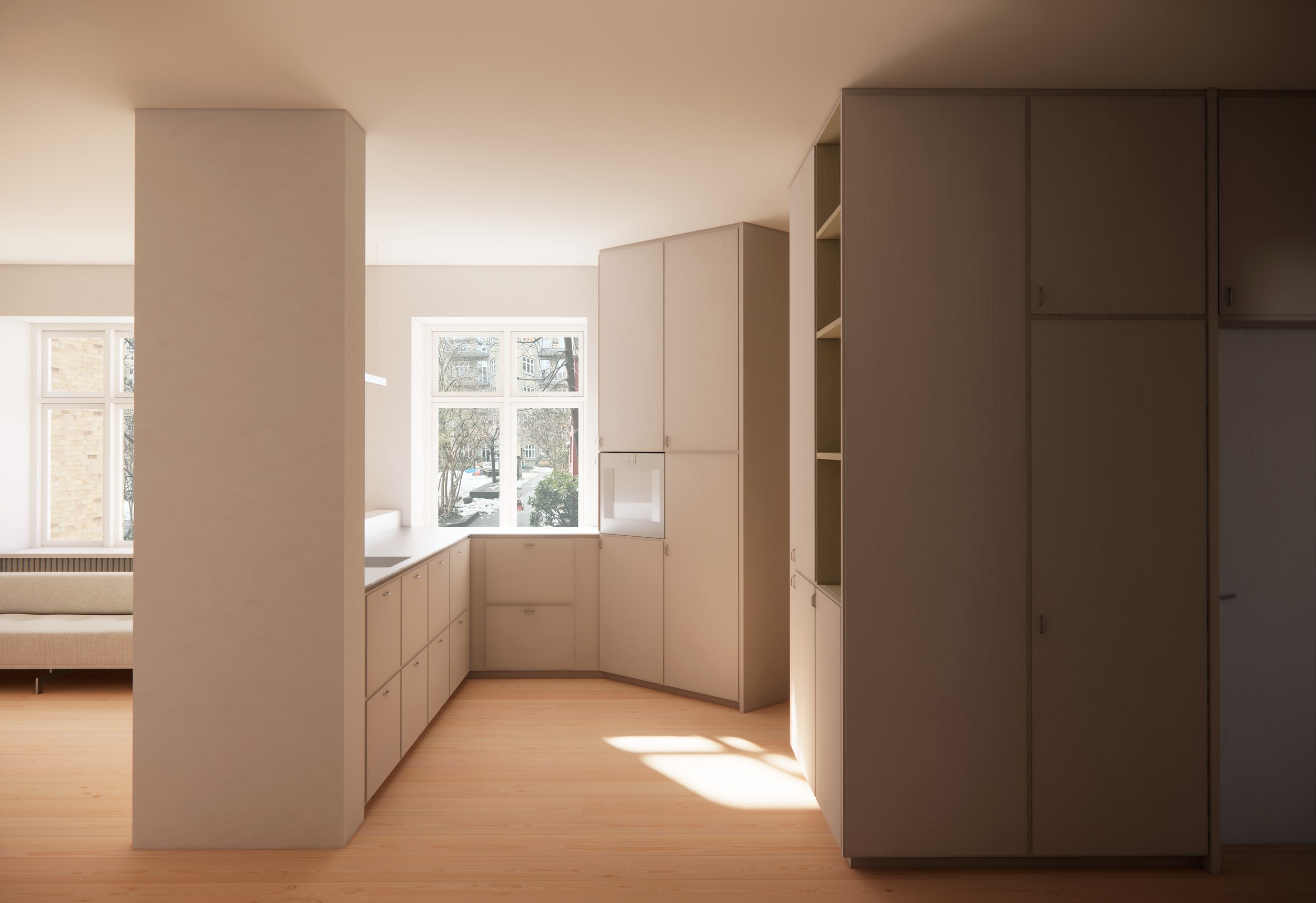
The intervention is primarily realized through integrated, durable furniture elements inserted within the existing framework. These provide functional, long-lasting solutions while establishing a calm and timeless architectural expression.
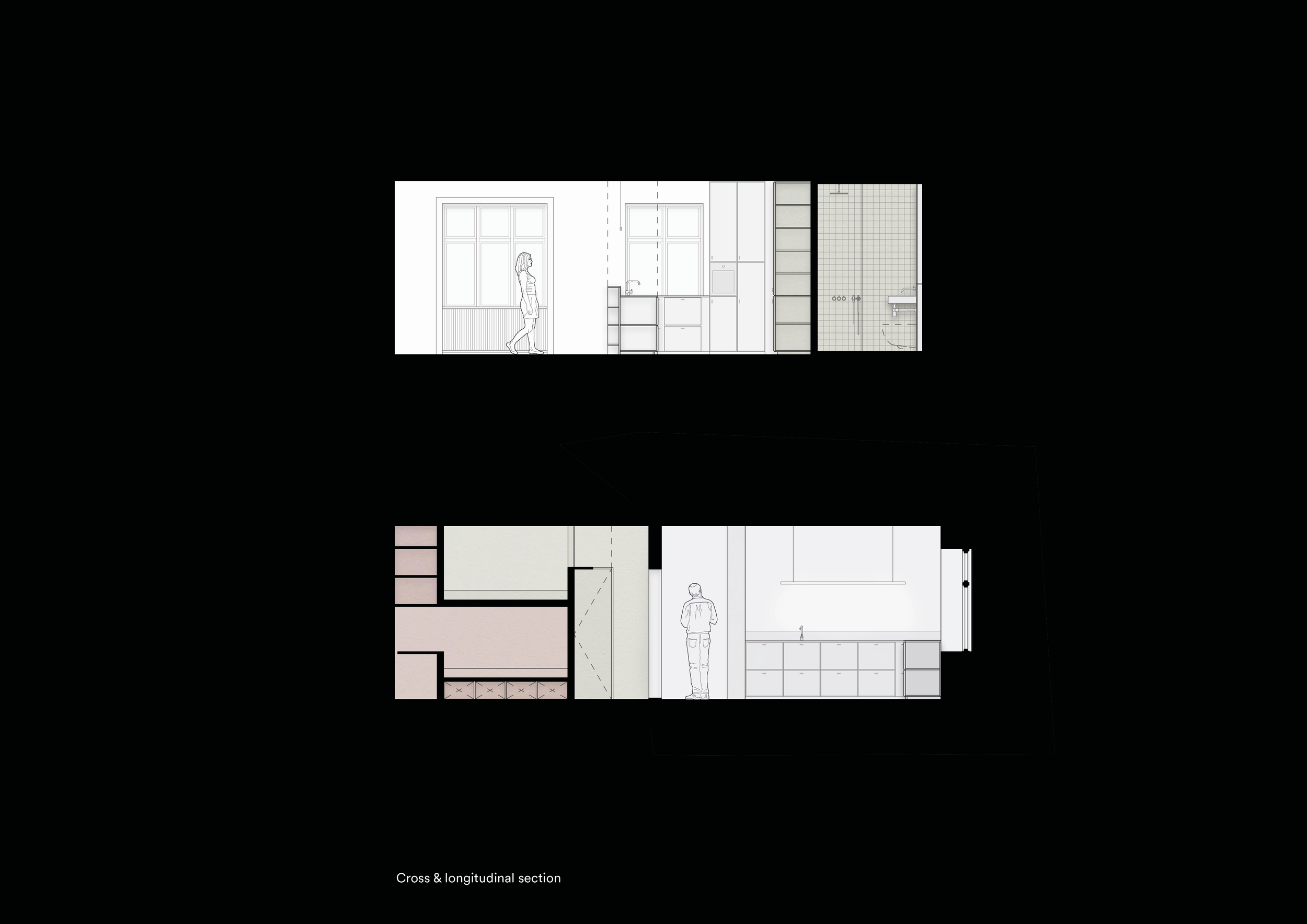
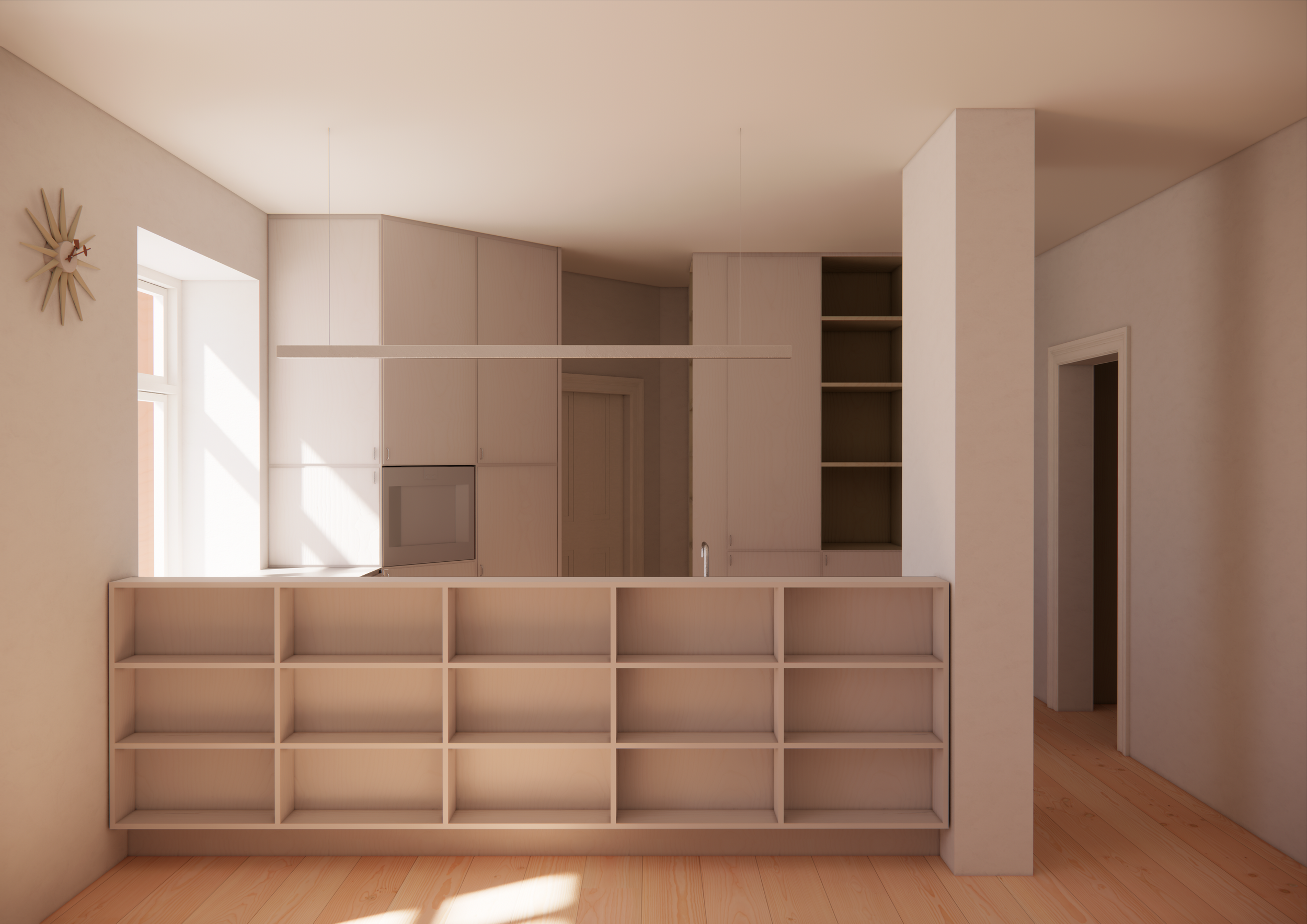
A continuous built-in element connects the entrance, bathroom, and kitchen, creating a unified system that enhances spatial clarity and storage. The kitchen is designed as an L-shaped layout with integrated cabinetry, complemented by a matching bookcase that organizes the adjoining living space.
Framework Transformation
Nørrebro, Copenhagen, Denmark, Private Residence
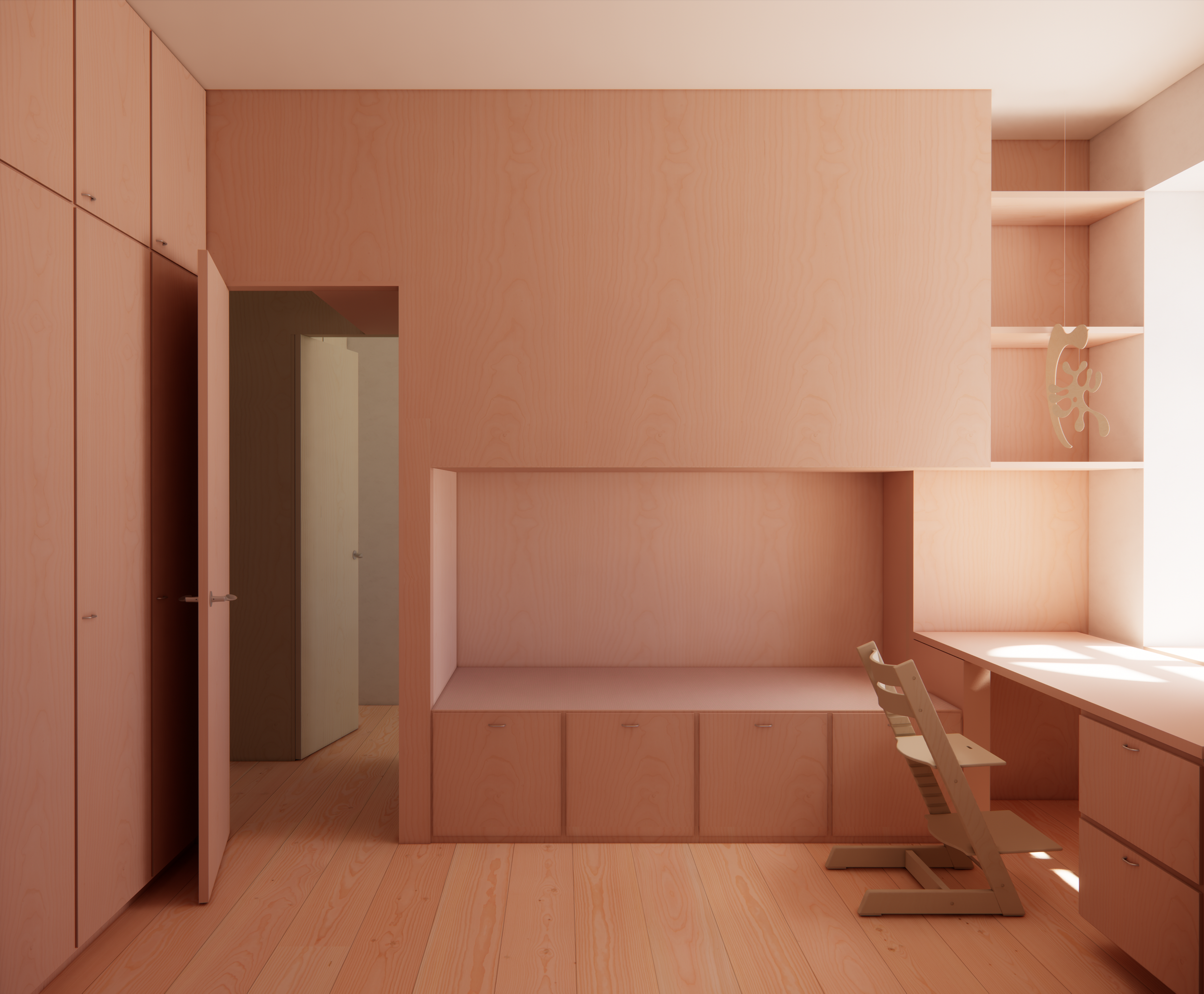
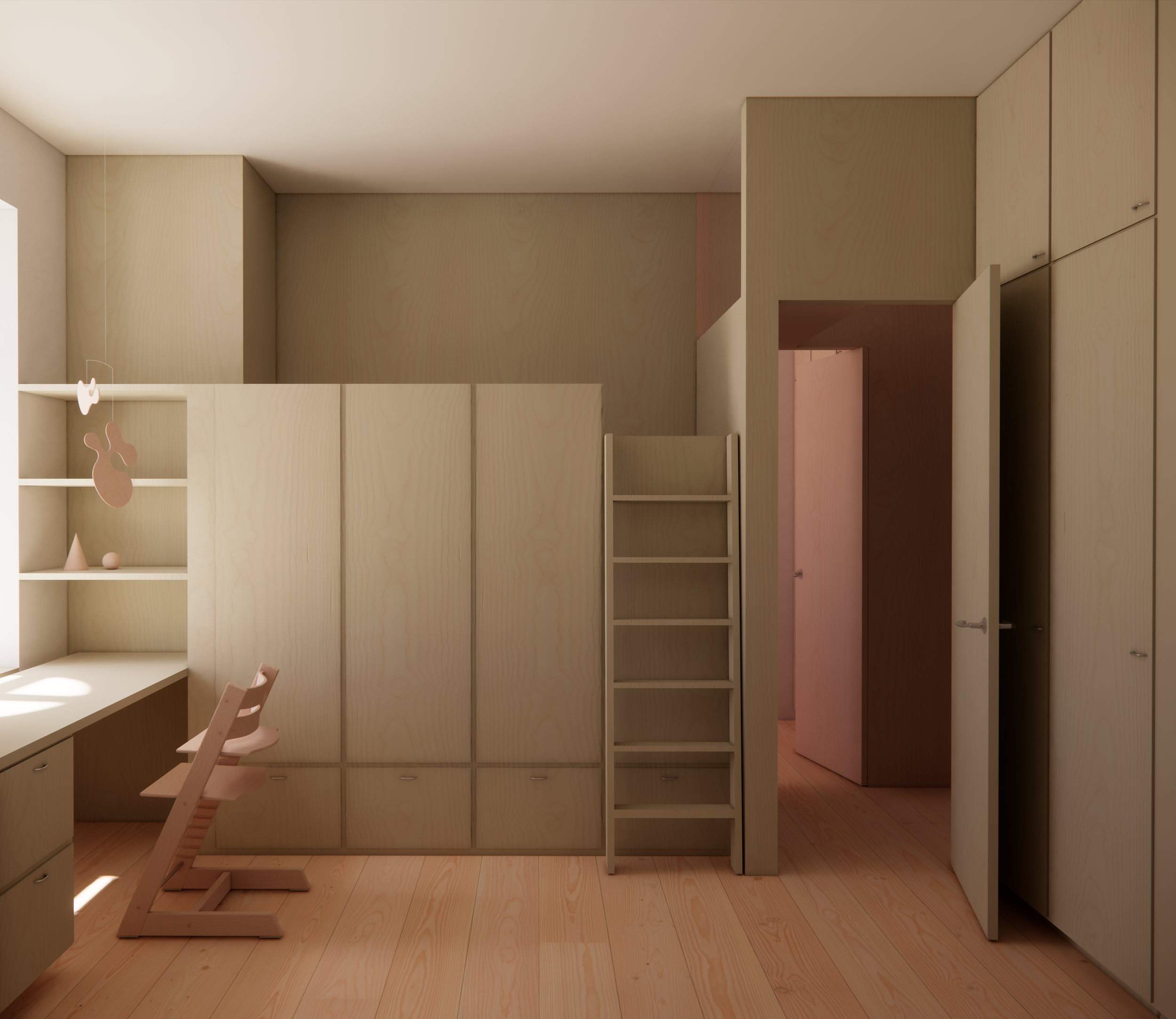
The former large room is divided into two children’s rooms, structured around a custom-designed furniture unit incorporating beds, storage, desks, and shelving. The solution maximizes functionality while giving each room a distinct identity.
In the bedroom, an integrated wall unit combines storage, bed, and workspace, creating an efficient and open spatial experience.
The renovation also includes a new bathroom with integrated storage and wall-mounted fixtures, as well as new Douglas fir plank flooring, adding warmth and material depth.
The transformation establishes a robust and timeless framework for flexible family living, balancing functionality, durability, and spatial clarity.